

Upper and Middle Back Pain Exercises: A Gentle Guide for Older Adults
Upper and middle back stiffness can make everyday activities feel more difficult. Reaching for a cupboard, turning while sitting, standing upright for longer periods or completing household tasks may become uncomfortable when movement through the upper back is restricted.
For older adults, reduced activity can sometimes contribute to further stiffness and loss of confidence. Gentle movement may form part of an appropriate management plan, but exercises should always suit the individual’s symptoms, physical capacity and other health considerations.
Key Takeaways
- Upper and middle back pain can have several possible causes.
- Thoracic mobility may become limited through stiffness, reduced activity or changes affecting the spine and surrounding muscles.
- Gentle movement should be comfortable and appropriate for the individual.
- Exercise is not suitable for every situation, particularly when symptoms are severe, unexplained or changing.
- Physiotherapy can help assess movement and develop a personalised exercise programme.
Causes of Upper and Middle Back Pain in Older Adults
The upper and middle back includes the thoracic region of the spine, where the ribs attach. Stiffness or pain in this area can be related to changes in movement, muscle tension, joint stiffness, previous injuries, prolonged inactivity or other health conditions. The experience can also vary considerably from one person to another.
Healthdirect explains that back pain can affect different parts of the spine and surrounding tissues, while most back pain is not caused by a serious medical problem. However, certain symptoms require medical attention. Read Healthdirect’s information about back pain.
Reduced Activity and Stiffness
When someone becomes less active, the muscles and joints involved in everyday movement may become less accustomed to regular activity. This can happen after illness, hospitalisation, injury or a change in routine.
An older adult may notice this when returning to activities such as gardening, cleaning, shopping or preparing meals. Rather than focusing solely on the painful area, physiotherapy can consider how strength, mobility and general activity levels influence everyday function.
Posture and Daily Habits
Long periods spent sitting, reading, using a computer or watching television may contribute to discomfort or stiffness for some people. Staying in one position for extended periods can make movement feel harder when changing position.
Better Health Channel also identifies posture and everyday habits as relevant considerations when managing back pain. Read the Better Health Channel guide to back pain.
Exercise Safety at Home
Exercise at home should be approached with care, particularly for older adults who have other health conditions, balance concerns or a history of falls. The purpose of gentle exercise is to support useful movement without pushing beyond what the person can safely tolerate.
A suitable starting point depends on the person’s symptoms and physical capacity. A physiotherapist may adjust the range, repetitions, position or support required so the exercise fits the individual.
Create a Safe Exercise Space
Before beginning exercises, choose an area with enough room to move comfortably. Remove obvious trip hazards and make sure a stable chair or other appropriate support is available when an exercise is performed in sitting or standing.
The exercise environment should feel secure. Someone who already feels unsteady may become hesitant if they are asked to perform movements without enough support or preparation.
Know When to Stop
Exercise should not be used to push through severe or unexplained symptoms. New weakness, significant numbness, major changes in balance or rapidly worsening symptoms require appropriate health assessment.
For general physiotherapy information, Healthdirect’s physiotherapy resource provides information for Australian consumers about physiotherapy and accessing professional care.
Gentle Thoracic Mobility Exercises
Thoracic mobility exercises are intended to encourage comfortable movement through the upper and middle back. The exercises below are general examples and should not replace an individual assessment, particularly where pain is persistent, severe or associated with other symptoms.
The goal is controlled movement rather than forcing a large range. Breathing normally and moving slowly can help the person remain aware of how the body responds.
Seated Thoracic Extension
Sit towards the front of a stable chair with both feet supported on the floor. Place your hands comfortably across your chest or behind your head if that position feels safe and natural.
Gently allow your upper back to extend over the back of the chair without forcing the movement. Return to an upright position and repeat only through a comfortable range. The movement should feel controlled, without sudden pushing or jerking.
Supported Rotation
Sit comfortably with both feet supported. Keep your movements slow as you gently turn your upper body towards one side, allowing your head to follow naturally if comfortable.
Return to the centre and repeat on the other side. A smaller movement can still be useful if the person feels stiff. The aim is to explore comfortable rotation rather than reaching as far as possible.
Posture Reset
Sit or stand comfortably and allow your shoulders to relax. Gently bring your upper body into a more upright position while keeping your breathing relaxed.
Hold the comfortable position briefly before returning to a natural posture. This can be practised during everyday activities, particularly after a period of sitting.
Connecting Upper Back Exercises With Everyday Activities
Exercises become easier to understand when they have a clear relationship with daily life. An older adult may be interested in moving more comfortably while cooking, reaching for objects, turning to speak to someone or sitting through a meal.
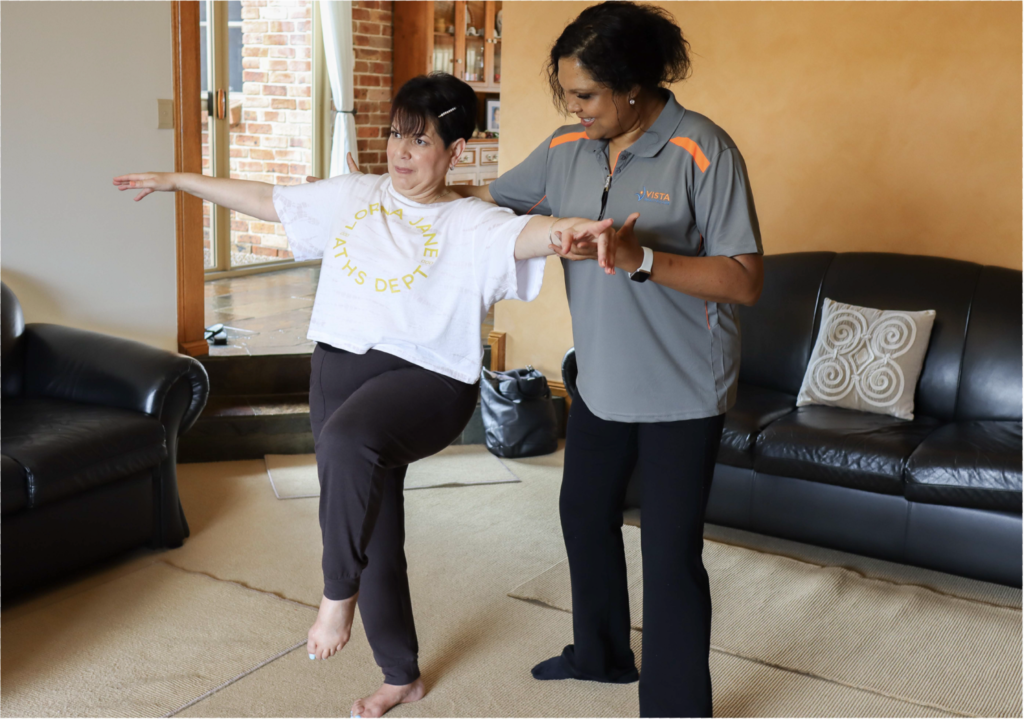
Vista Healthcare provides mobile physiotherapy at home, allowing the therapist to consider how movement limitations affect the activities that matter to the individual. The service can be delivered in a home or other suitable environment across Greater Sydney, Brisbane and the Gold Coast.
Matching Exercise to Personal Goals
Someone who wants to return to gardening may need a different programme from someone whose main concern is sitting comfortably at the dining table. Individual goals help determine which movements should be practised and how they should progress.
Vista Healthcare’s home physiotherapy approach includes exercise prescription and encourages clients to develop self-management skills alongside clinician guidance. Learn more about Vista Healthcare’s physiotherapy services.
Building Strength Alongside Mobility
Improving movement is only one part of maintaining physical function. Strength, balance and general conditioning may also influence how confidently an older adult moves around the home.
A programme can therefore include appropriately selected strengthening activities alongside mobility exercises. The focus should remain on practical goals, such as standing from a chair, walking around the home, carrying light household items or completing personal tasks.
Why Gradual Progress Matters
A person who has been inactive for a long period may need a gentle starting point. Increasing exercise gradually gives the therapist an opportunity to monitor tolerance and make adjustments.
Vista Healthcare describes its physiotherapy programmes as graded according to the client’s physical capacity and individual rehabilitation goals. Explore Home Care Physiotherapy for Seniors for further information about mobility, strengthening and balance support for older adults.
When Upper Back Pain Needs Assessment
Persistent upper back pain should not automatically be attributed to ageing. An assessment may be useful when symptoms continue, begin to interfere with everyday activities or are accompanied by other changes in movement or sensation.
Healthdirect advises seeking medical care when back pain involves concerning neurological symptoms or problems controlling the bowel or bladder. Review Healthdirect’s Back Pain Guidance.
When Physiotherapy May Be Appropriate
Physiotherapy may be appropriate when stiffness, pain or reduced physical capacity is affecting function and an underlying medical concern has been appropriately considered.
Vista Healthcare’s Chronic Pain Management service includes assessment, education, pain management strategies and individual rehabilitation approaches for people experiencing persistent pain.
FAQs
What Is the Difference Between Upper and Middle Back Pain?
+
Upper and middle back pain generally refers to discomfort around the thoracic region, which runs through the area between the neck and lower back. Symptoms can involve muscles, joints, nerves or other structures.
The cause cannot be determined from location alone. A professional assessment may be required when symptoms persist or interfere with daily life.
Are Upper Back Exercises Safe for Older Adults?
+
Some gentle exercises may be appropriate, but the correct movements depend on the individual. Existing medical conditions, balance problems, pain severity and previous injuries should be considered.
A physiotherapist can help select exercises and adapt them according to physical capacity and goals.
How Often Should I Perform Thoracic Exercises?
+
There is no single schedule that suits everyone. The appropriate frequency depends on the person's assessment, the exercise selected and how the body responds.
A physiotherapist can provide guidance on repetitions, frequency and progression.
Can a Physiotherapist Visit My Home?
+
Yes. Vista Healthcare provides mobile physiotherapy in homes and other appropriate settings across Greater Sydney, Brisbane and the Gold Coast. Explore Home Visit Physiotherapy.
Can Upper Back Pain Be Related to Poor Posture?
+
Posture may contribute to discomfort for some people, particularly when a position is maintained for a long period. However, pain usually has several possible contributing factors.
A physiotherapist can assess movement patterns and determine whether changes to posture or daily habits may be useful.
Give Your Upper Back Room to Move Again
Upper and middle back stiffness can make ordinary activities feel harder, particularly when movement has gradually reduced. Understanding the symptoms, starting with appropriate movement and knowing when to seek professional support can help older adults maintain confidence and everyday function.
When stiffness or pain is affecting the activities that matter to you, contact Vista Healthcare to discuss whether mobile physiotherapy may be appropriate.